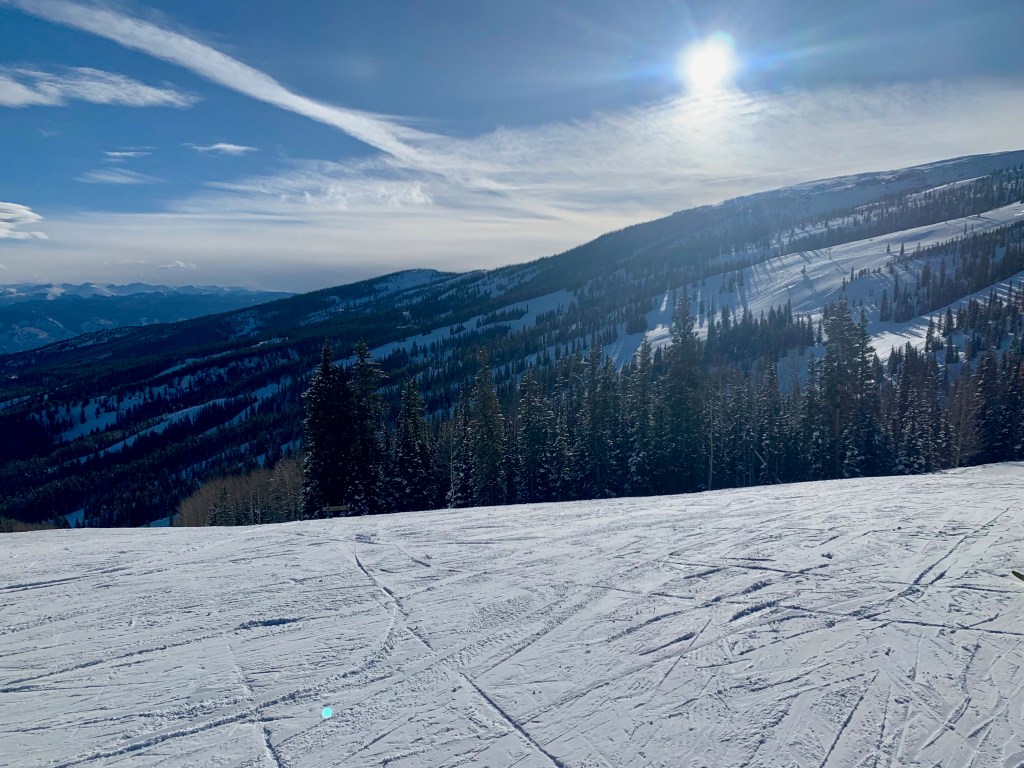
If you’re a skier or snowboarder, Colorado is the place to be in the winter. With SO many top-tier mountains for riding — many of which are within driving distance from one another — it’s understandable why people flock to Colorful Colorado during the winter months. And my partner and I were part of that pow-pow-seeking crowd in the Winter of 2023.
As soon as the Christmas festivities ended, we packed up our cars and spent January through April in the mountains of Colorado where we worked during the week and shredded the slopes every free moment we had. After exploring 8 Colorado ski resorts during the Winter of 2023, here’s our complete review and ranking of each mountain we visited:
*Disclaimer: This ranking is 100% just our opinions. You can’t go wrong spending a few days at any of these awesome places.
8. Beaver Creek
Located down the road from Vail Ski Resort is Beaver Creek — a mountain with 167 trails, 24 lifts, and over 2,000 acres of skiable terrain. That sounds pretty great, right? Okay, then how did Beaver Creek rank last place? While Beaver Creek is a cool mountain with plenty of trails, we found its layout confusing. Typically, the higher you go up the mountain, the steeper and more challenging the terrain. But Beaver Creek is the opposite where a lot of the trails at the top of the mountain are Green or Blue. Don’t believe us? Check out this area off the Red Buffalo Express (an area near the top of the mountain):

Another con of Beaver Creek was that the trails that were fairly steep got skied off quickly. We hit Larkspur a few times in the morning, and it was amazing. But unfortunately by 1 PM, the trail was cut up to the point that I didn’t realize it was the same trail from the morning.
Don’t get us wrong, Beaver Creek has plenty of things going for it: It has a ton of skiable acreage, plenty of groomed trails, and McCoy Park is really fun and features some good tree skiing. Plus, since it’s a decent drive from Denver, Beaver Creek doesn’t get the day-trip traffic that other mountains — like Keystone, Abasin, Copper, and Breckenridge — get.
Summary of Beaver Creek
Trail shoutouts: Larkspur, McCoy Park
Pros:
- Big mountain with a lot of skiable acres
- Doesn’t get the day-trip crowds that other mountains get
- McCoy Park is a good time
Cons:
- Larkspur was good but quickly got skied off
- Top of the mountain was mostly green tails
- Could use more snow (on the day we were there)
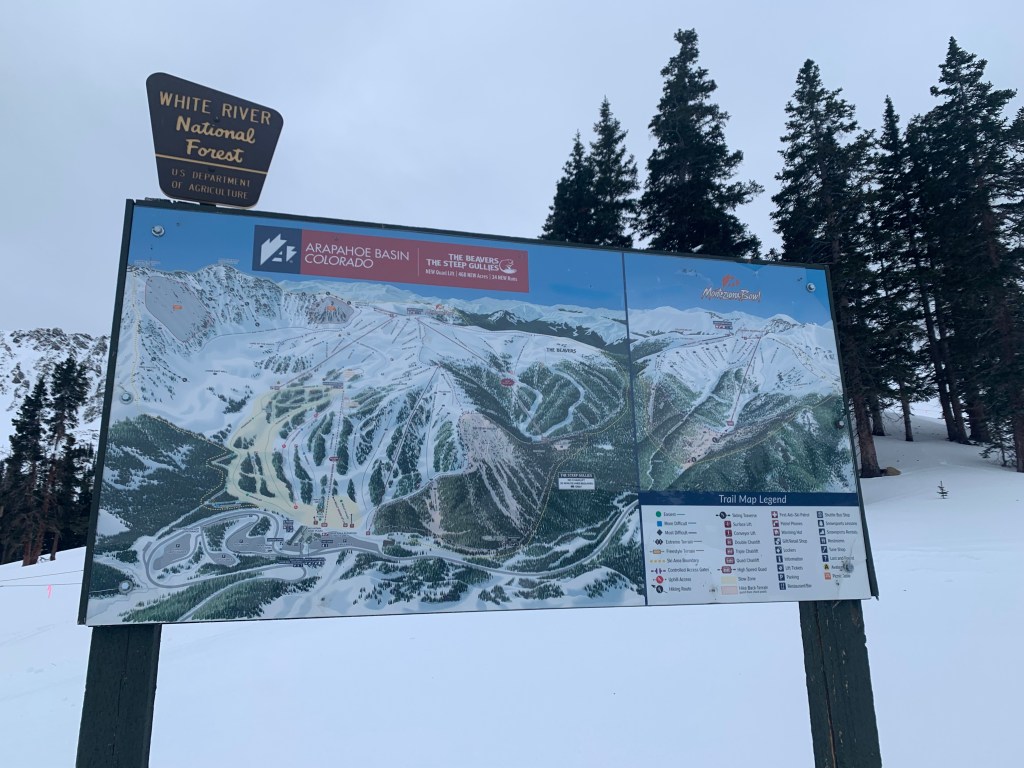
7. Arapahoe Basin (Abasin)
I know, I know, I know — there are A LOT of people who feel passionately about Arapahoe Basin Ski Resort (AKA Abasin) and will not believe that we ranked it 7 in a list of 8 mountains (the mountain is nicknamed The Legend after all). But hear us out: We only spent one day at Abasin, and not only was it insanely crowded — it was the Sunday of Martin Luther King Jr. weekend — but conditions also weren’t the best.
Abasin has more than 1,400 skiable acres, 9 lifts, and the longest winter season in Colorado — this year its last day for winter riding was June 4. It also has some steep and challenging trails and a great vibe — expect to see people tailgating and grilling in the parking lot throughout the day. That said, we can totally understand why Abasin is a top mountain among plenty of skiers and snowboarders. For us, we didn’t have the best day…but we see the potential of the mountain and definitely want to revisit it in the future.
Summary of Abasin
Trail shoutouts: Ptarmigan, High Noon
Pros:
- Steep terrain
- Fun vibe with tailgating in the parking lot
- A lot of challenging trails
- Nice views of Breck and Keystone at the top
Cons:
- Could use more snow
- Crowded/long lift lines
- Need to get there early to nab a spot close to the base (which costs $20) or you’ll have to park further away (although those lots are free)
6. Keystone
Located near Dillon and Silverthorne is Keystone Ski Resort — a place we’ve noticed people either love love love or hate hate hate. The thing with Keystone is it’s a mountain where you can have a great day with exceptional conditions, or you can have a day with mediocre snow, long lift lines, and crowded trails.
We headed to Keystone on the first weekend of April. The mountain didn’t have quite as much snow as some of the others we were used to, and the first few trails were super icy (yuck). Being from the East Coast, we know icy conditions all too well — and it’s not what you want when skiing in Colorado.
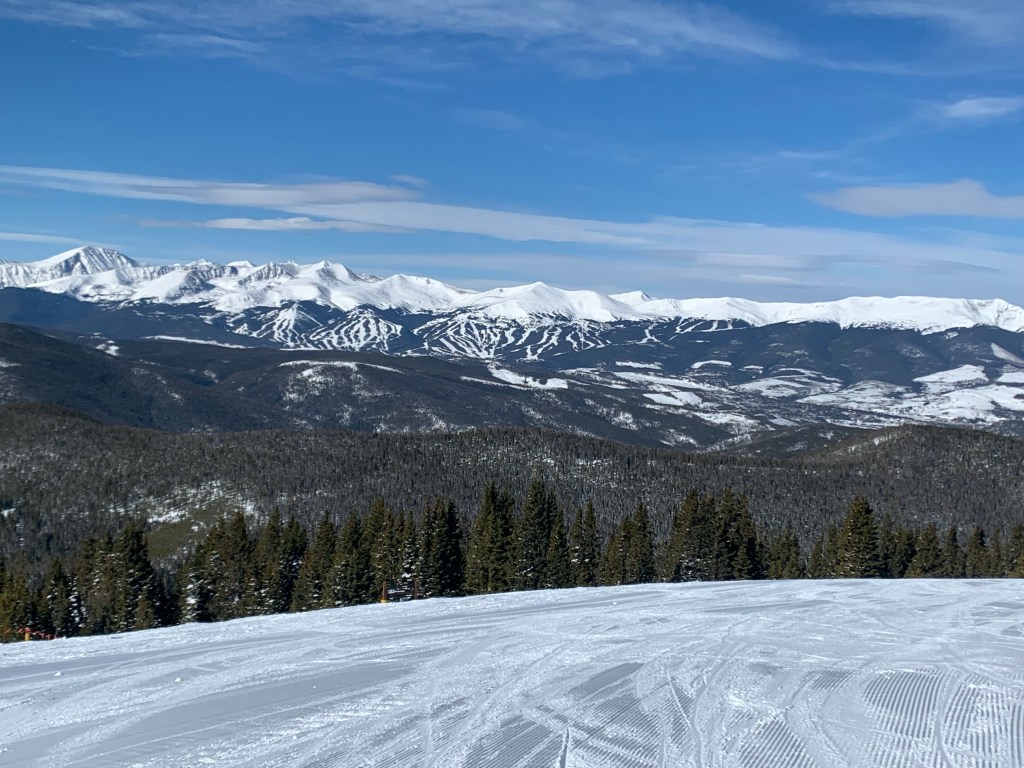
However, the mountain features over 3,000 acres of skiable terrain and sits at 11,640 feet, providing gorgeous views of the surrounding area and Breckenridge Ski Resort. While the first few trails were a little icy, we headed to a different section of the mountain and ended up having an awesome day. We found the mountain to be steep with a good bit of groomed trails and moderately challenging terrain. The cherry on top: parking at Keystone is free. YUP, you read that right — free parking is hard to find these days at ski resorts, but Keystone provides a large parking lot with complimentary parking. Just for that, we had to bump it up on our list. #MakeSkiParkingFreeAgain
Summary of Keystone
Trail shoutouts: Jackwacker, Flying Dutchman, Porcupine, Bighorn
Pros:
- Free parking
- Steep terrain
- Decent amount of groomed trails that are fun to cruise down
Cons:
- Doesn’t get the amount of snow some of the other mountains get
- Some trails in the morning were very icy
- Can get crowded on weekends due to its proximity to Denver
5. Loveland
Shout out to the local and independently owned Loveland Ski Resort, which features over 1,500 acres of skiable terrain and phenomenal trails. If you’re looking for a straightforward, no-frills day of riding, Loveland is the place to go. It offers reasonable lift ticket prices — we managed to get a 4 pack for $200 before the season started…which is the same price some ski resorts charge for one day of riding — and even more reasonable food and beverage prices in its main lodge. Parking is free (WOOOOOOOOO!), and since it’s not on the Epic of Ikon pass, it doesn’t get the same kind of crowds that mountains like Copper and Breckenridge get.
That said, Loveland doesn’t offer high-speed chairs, the trails are shorter than the larger mountains in the area, and when the main lot fills up, you have to park down the road and take a shuttle to the base, which can be a little bit of a hassle on crowded days.

Summary of Loveland
Trail shoutouts: Primer Bowl, Castle Rock, Tomahawk
Pros:
- Great conditions
- No-frills skiing
- Reasonable prices
- Free parking
- Independently owned, so no Epic/Ikon crowds
Cons:
- No high-speed chairs
- Trails are not as long as some of the other mountains in Colorado
- When the main lot fills up, you have to park down the road and take a shuttle to the lodge
Note: We loved Loveland and had two awesome days there this winter. HOWEVER, we also skied the worst run of the season at Loveland. It’s called The Face, and it leads to a tunnel — which is why we tried it. But you have to remove your skis or snowboard and walk through the tunnel, and the trail itself is narrow with moguls, making it VERY challenging. If you go to Loveland, we highly recommend avoiding this trail unless you’re a very experienced rider.
4. Breckenridge
Ah Breckenridge, one of the most well-known mountains in Colorado. And for good reason: The resort offers 2,908 acres of skiable terrain — 40% of which is considered high alpine terrain — and 187 trails. Breck’s summit reaches nearly 13,000 feet and is home to the Imperial Chair — the highest chairlift in North America at 12,840 feet elevation. The chair takes you to Breck’s Imperial Bowl, an area of the mountain with some seriously challenging and one-of-a-kind terrain.

Aside from those impressive stats, Breckenridge Ski Resort is a large-scale resort that offers options for skiers and snowboarders of all levels. And once you’re done shredding for the day, Breck is known for its festive après-ski scene. There’s a variety of options for post-ski food and drink on the mountain at Peaks 7, 8, and 9. Or, if you’d rather head down to the base of the mountain, the village of Breck is full of quaint, delicious, and cozy bars and restaurants.
Of course, Breckenridge isn’t perfect. It’s very well-known, so it attracts a lotttttt of crowds — including Instagram influencers just looking to pose in their boots with the fur (with the furrrr). Breckenridge also isn’t the most challenging mountain in Colorado. If you’re a new or moderate skier, you’ll have a blast. If you’re an advanced skier looking for a challenge, you may not want to devote an entire week to Breck’s trails. In our opinion, a Blue trail at Breck is equivalent to a Green at mountains like Abasin and Snowmass.
Summary of Breckenridge
Trail shoutouts: View this blog to view how we rank Breck’s runs
Pros:
- Large mountain with plenty of trails to explore and high-speed chairs
- Home to the Imperial Lift — the highest chairlift in North America — which takes you to Imperial Bowl, where you’ll find some amazing terrain
- Fun party atmosphere with DJs
- Excellent ski village with tasty restaurants and great shopping
Cons:
- One of the most well-known mountains, so it attracts a lot of crowds
- $25 for parking, and the lots fill up very quickly
- Not the steepest or most challenging terrain
3. Copper
Fun fact about Copper Ski Resort: In November and December, the U.S. National and International Ski Teams train there. Knowing that, Copper’s gotta be a pretty respectable mountain, right? Right. We only spent two days there, and it stole our hearts quickly.
What makes Copper so special? To put it simply: Good terrain, good folks, and good beers. And when the mountain gets that fresh pow-pow? Even better.
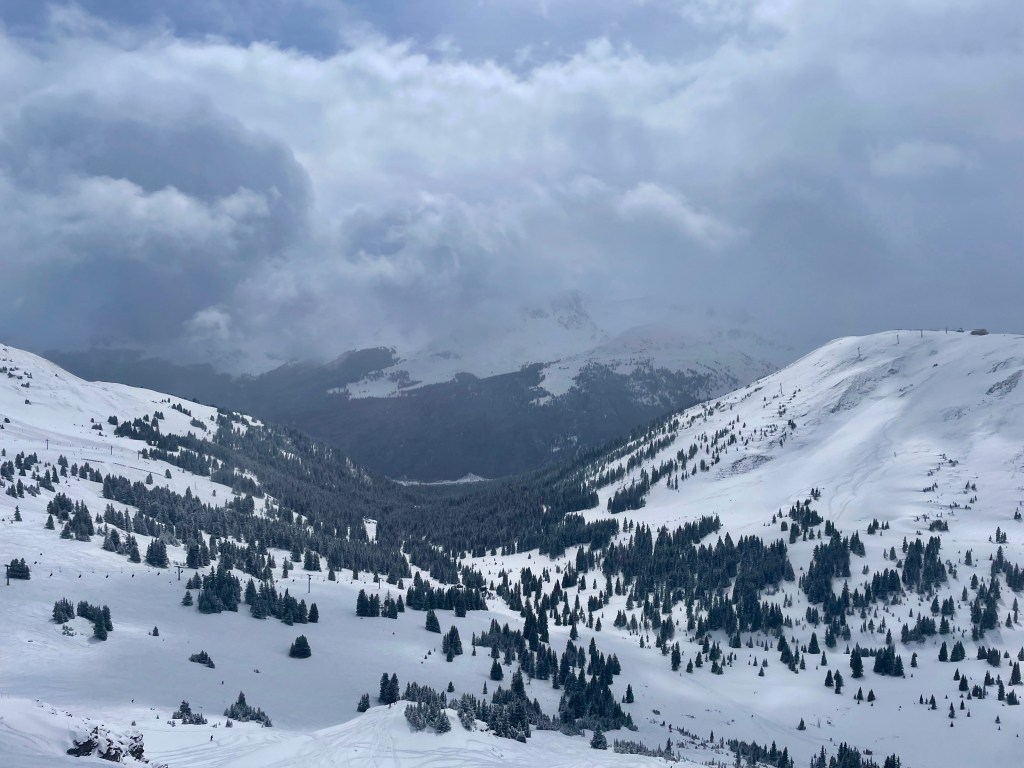
Copper provides a good mix of terrain, too. Its front side has plenty of groomed Blue, Green, and Black trails, while its back bowls provide rugged terrain for folks looking for a challenge. Plus, because of its high elevation and location, Copper gets a healthy amount of snow in the winter — which means lots of powder days.
The downside of Copper? Since it’s on the Ikon Pass and is home to a renowned terrain park, it attracts big crowds. The parking is pricey as well, reaching $40 in some of the lots closer to the base. There is a free parking lot, but you have to take a shuttle. We’ve never used it, but we’ve heard that during peak days the shuttle and parking situation can be a hassle.
Summary of Copper
Trail shoutouts: Fairplay, Union Peak, Matchless (Copper Bowl)
Pros:
- Excellent back bowls with steep terrain
- Fun atmosphere
- Gets plenty of snow in the winter, so plenty of powder days
- Home to Woodward Copper Mountain Terrain Park
- Cheap beers at Solitude Station
Cons:
- Attracts a lot of crowds, especially since it’s on the Ikon Pass and about two hours from Denver
- Expensive parking, and if you opt for the free lot, you have to take a shuttle to the base
2. Snowmass
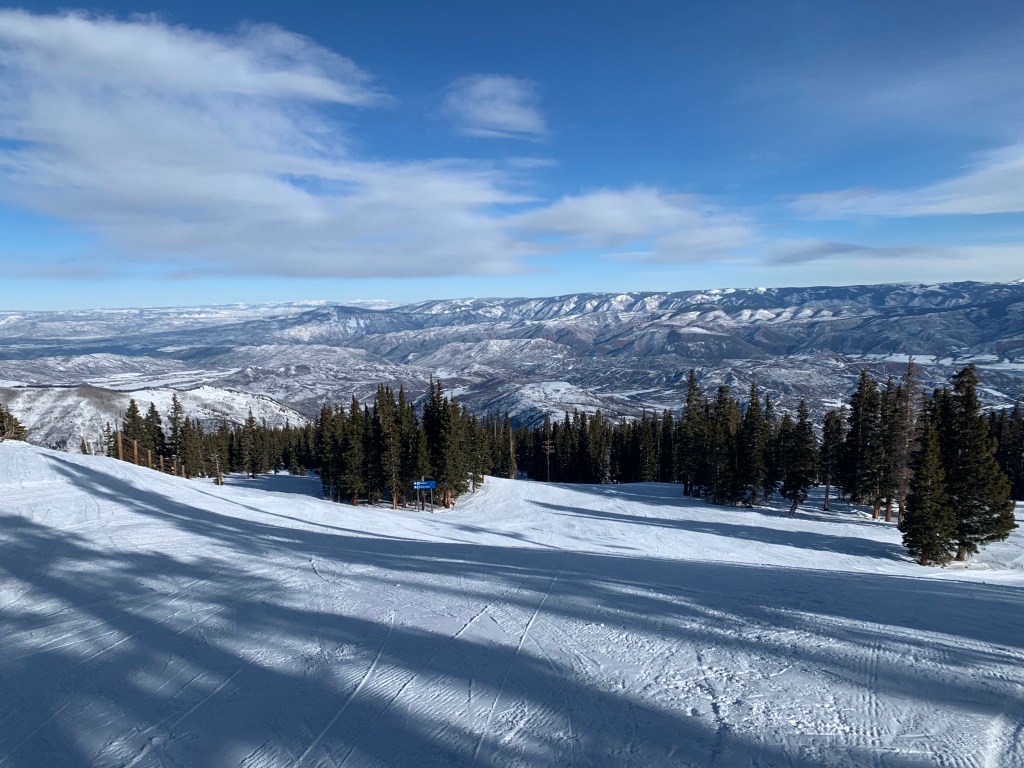
Sadly we only spent one day at Snowmass Ski Resort — but what a glorious day it was. Located in the Aspen region of Colorado, Snowmass is a beast of a mountain that’s worth checking out. Just be warned, if you don’t have the Ikon pass, it’ll cost you a pretty penny (most day passes are about $200). However, if there was ever a mountain where the hefty price of lift tickets was worthwhile, it’s Snowmass.
The massive mountain has over 3,000 skiable acres and 21 chairlifts. If you head to the Big Burn lift, you’ll have access to plenty of groomed Blue trails perfect for cruising. And if you want something more challenging, you can take the Poma up to Cirque Headwall, where you’ll find steep, rugged terrain and tree skiing.
Once you’ve tired yourself out, head down to Snowmass Village, which is known for its après-ski scene. The walkable village offers a variety of shops, restaurants, bakeries, and cafes, so you can easily find delicious food and libations when you’re not shredding the slopes.
The biggest downside of Snowmass is that, since it’s Aspen, you can expect Aspen prices. From the lift tickets to groceries, a trip to Snowmass is going to run up a tab. If you’re flying into Denver and driving to Snowmass, it’s worthwhile to stock up on groceries before you get to Aspen.
Summary of Snowmass
Trail shoutouts: Cirque Headwall, Dallas Freeway, Sneakys
Pros:
- Massive mountain with tons of skiable terrain
- Challenging slopes with plenty of groomed cruisers
- Long trails
- Cute village with a lot of great restaurants and shops
Cons:
- Aspen atmosphere (poshness off the charts)
- Food, drinks, lift tickets, parking, and lodging are expensive
Anddddd the winner is…
1. Vail
Here’s the thing about Vail: The mountain is i.n.c.r.e.d.i.b.l.e. — the management, on the other hand, sucks. Vail Resorts and the bigwigs running the mega-corporation aren’t exactly well-liked among skiers and snowboarders. But most of us can put our differences aside, sigh loudly as we pay $40 for parking and $36 for ski lodge chicken tenders, and shred the phenomenal terrain Vail has to offer.
Of course, you can’t talk about Vail Ski Resort without mentioning its legendary back bowls. Don’t get us wrong — the front of Vail offers some really fun terrain. But the back bowls are where you go when at Vail. We probably skied the various runs at China Bowl over 50 times this winter, and it still wasn’t enough. Fun fact about China Bowl: We hit our top speeds of the season (57 m.p.h and 72 m.p.h — thanks Slopes app!) cruising down our favorite trail in China Bowl, Chopstix.

Looking for something a bit more rugged and in the trees? Head over to Blue Sky Basin for some killer terrain and tree skiing.
The cherry on top of Vail is the scenic views from every direction. If you’re like me, you’ll find yourself quickly filling up your phone’s camera roll with photos of the majestic, snow-covered mountains surrounding the resort. Vail is also home to an adorable — although pricey — village with unique shops and restaurants. The village has a European vibe, and if that’s your cup of tea, you might find unique decor and fashion items in the boutiques throughout the village.
The downside of Vail is that it’s Vail — a famous mountain with a posh atmosphere, international crowds, and premium prices. Is it worth it? Yes, yes it is. Vail has over 5,000 acres of skiable terrain, 195 trails, 32 chairlifts, and its longest run is 4 miles long. So yeah — this is a mountain that’s worth every penny.
Another downside of Vail is the drive from Denver and getting through what’s known as the Vail Pass. This particular section of i70 is known for shutting down in bad winter weather. So if you’re planning a day trip, make sure there’s no snow in the forecast. Otherwise, you run the risk of getting stuck at the mountain until crews can make the pass driveable again.

Summary of Vail
Trail shoutouts: China Bowl (Chopstix, Poppyfields West, Poppyfields East), Blue Sky Basin (Cloud 9), Whiskey Jack, Pickeroon
Pros:
- Great conditions and gets plenty of snow (average of 354 inches a year)
- Legendary back bowls
- SO much skiable terrain
- Beautiful scenery everywhere you look
- Great village with adorable shops and restaurants
Cons:
- It’s Vail, so everything is expensive (example: $40 to park for the day)
- If you’re driving from Denver, the Vail Pass can close in snowy conditions
 The Traveling Worker
Leave a comment